Exploring depth, variation & transformation in natural colour
This advanced natural dyeing workshop is dedicated to one of the richest and most expressive colour families in the natural world — reds, pinks, and purples.
Designed for those with a foundational understanding of natural dyeing, this session invites you to go deeper into the nuances of colour: how it develops, shifts, and transforms across fibres, mordants, and modifiers.
Working with historic dyestuffs and traditional techniques, we will explore how a single dye bath can unfold into an entire spectrum — from soft blush tones to deep violets and complex, shadowed reds.
Location
Kallirois Parren 3, Athens
Duration
4.5 hours (10:30 – 15:00, including a short break)
Class Size
Maximum 6 participants
What you will explore
This is an intensive, hands-on workshop focused on colour control and expansion. Through guided experimentation, you will learn how to create a wide and sophisticated palette within the red–pink–purple spectrum.
Colour Sources
We will work with three powerful natural dyestuffs known for their rich tonal range:
Madder roots — earthy reds, warm terracottas, soft peaches
Cochineal — vibrant pinks, fuchsias, cool purples
Logwood bark — deep violets, greys, near blacks
You will learn how extraction methods, temperature, and timing influence the final hue — and how to push each dye beyond its expected result.
Expanding the Palette
A central part of the workshop is transformation.
Using modifiers such as iron, copper, citric acid, and cream of tartar, you will shift and evolve your colours — turning bright reds into moody plums, pinks into smoky lilacs, and purples into deep, complex tones.
You will observe how subtle chemical changes create entirely new colour.
Fibre & Colour Interaction
You will dye across a range of natural fibres: wool yarn, cotton yarn, silk fabric, linen fabric and cotton fabric. You will learn how each fibre absorbs and reflects colour differently is key to developing a refined and intentional palette.
Foundations Revisited
We will revisit essential processes with a deeper understanding:
What you will create
You will build a personal colour study and sample book, including:
A spectrum of reds, pinks, and purples from each dyestuff
Before-and-after modifier transformations
Swatches across all fibres
This becomes both a technical reference and a creative archive — something you can return to in your own practice.
What to bring
A notebook for colour observations and notes
Language: The workshop will be taught in Greek and/or English, depending on participants.
Exploring depth, variation & transformation in natural colour
This advanced natural dyeing workshop is dedicated to one of the richest and most expressive colour families in the natural world — reds, pinks, and purples.
Designed for those with a foundational understanding of natural dyeing, this session invites you to go deeper into the nuances of colour: how it develops, shifts, and transforms across fibres, mordants, and modifiers.
Working with historic dyestuffs and traditional techniques, we will explore how a single dye bath can unfold into an entire spectrum — from soft blush tones to deep violets and complex, shadowed reds.
Location
Kallirois Parren 3, Athens
Duration
4.5 hours (10:30 – 15:00, including a short break)
Class Size
Maximum 6 participants
What you will explore
This is an intensive, hands-on workshop focused on colour control and expansion. Through guided experimentation, you will learn how to create a wide and sophisticated palette within the red–pink–purple spectrum.
Colour Sources
We will work with three powerful natural dyestuffs known for their rich tonal range:
Madder roots — earthy reds, warm terracottas, soft peaches
Cochineal — vibrant pinks, fuchsias, cool purples
Logwood bark — deep violets, greys, near blacks
You will learn how extraction methods, temperature, and timing influence the final hue — and how to push each dye beyond its expected result.
Expanding the Palette
A central part of the workshop is transformation.
Using modifiers such as iron, copper, citric acid, and cream of tartar, you will shift and evolve your colours — turning bright reds into moody plums, pinks into smoky lilacs, and purples into deep, complex tones.
You will observe how subtle chemical changes create entirely new colour.
Fibre & Colour Interaction
You will dye across a range of natural fibres: wool yarn, cotton yarn, silk fabric, linen fabric and cotton fabric. You will learn how each fibre absorbs and reflects colour differently is key to developing a refined and intentional palette.
Foundations Revisited
We will revisit essential processes with a deeper understanding:
What you will create
You will build a personal colour study and sample book, including:
A spectrum of reds, pinks, and purples from each dyestuff
Before-and-after modifier transformations
Swatches across all fibres
This becomes both a technical reference and a creative archive — something you can return to in your own practice.
What to bring
A notebook for colour observations and notes
Language: The workshop will be taught in Greek and/or English, depending on participants.

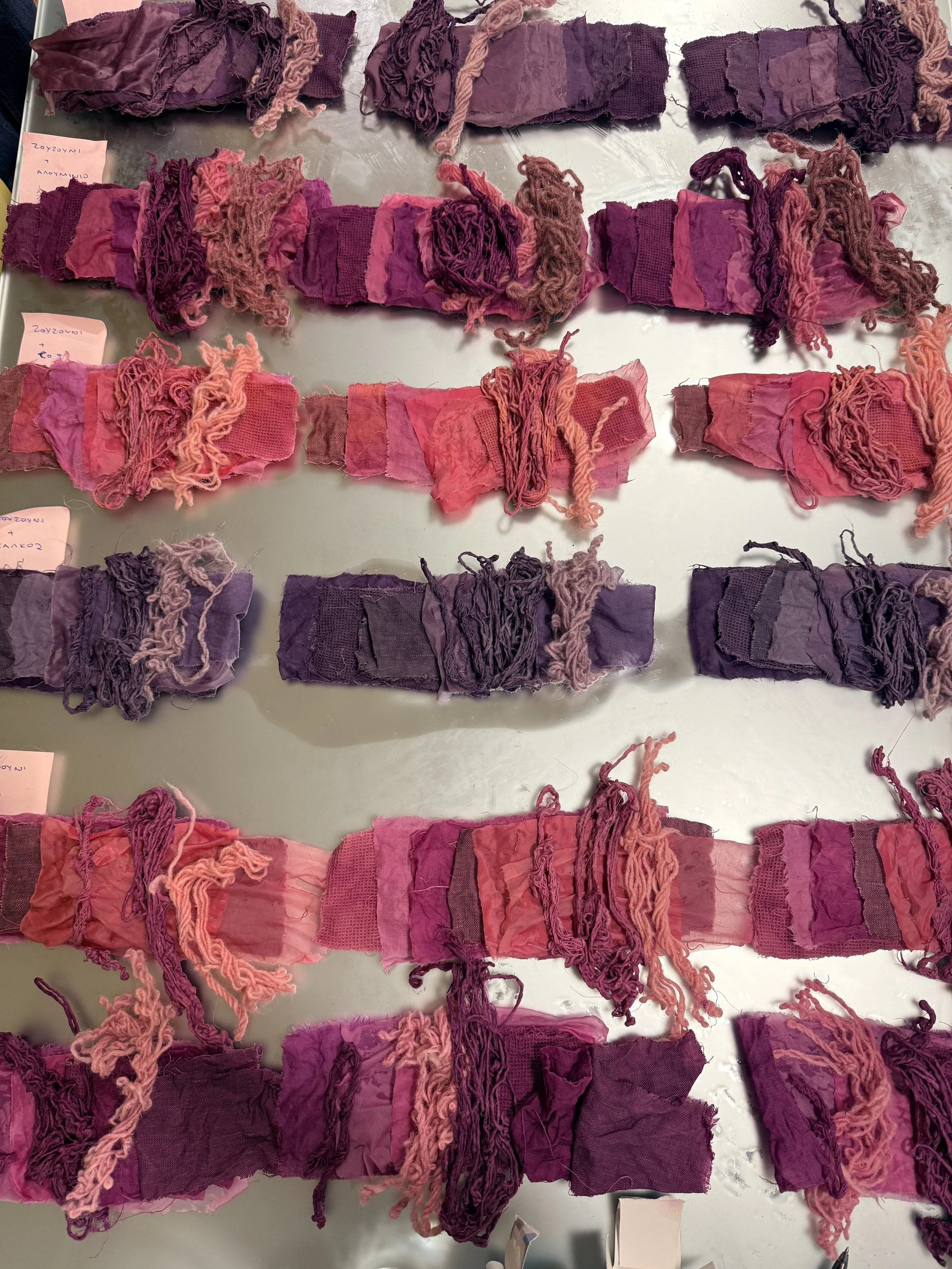 Image 1 of 20
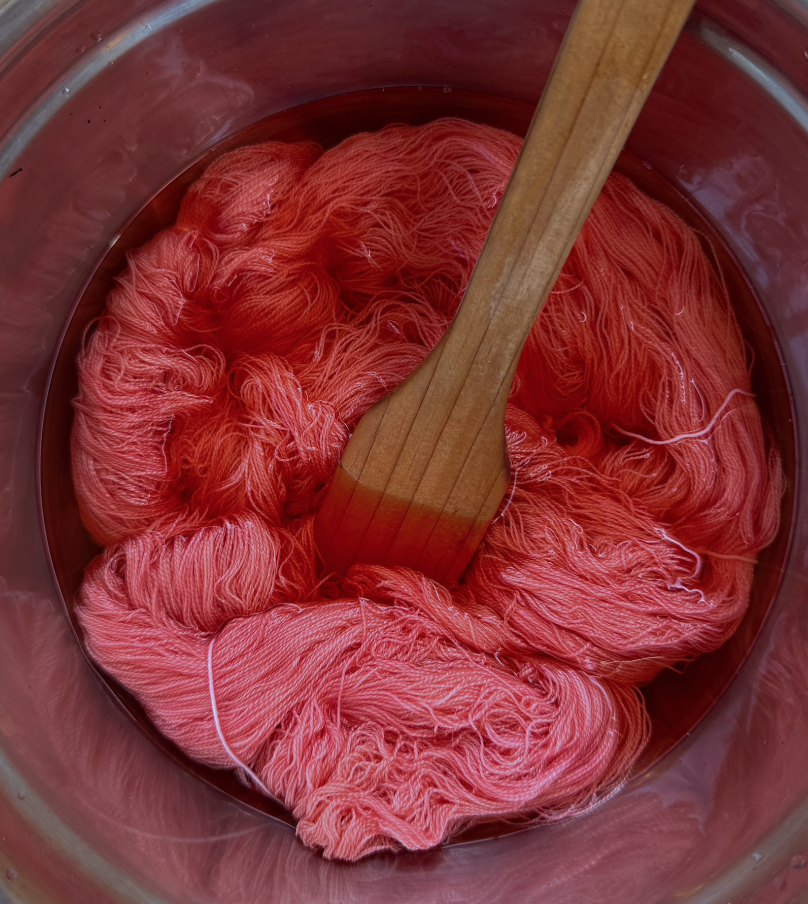 Image 2 of 20
 Image 3 of 20
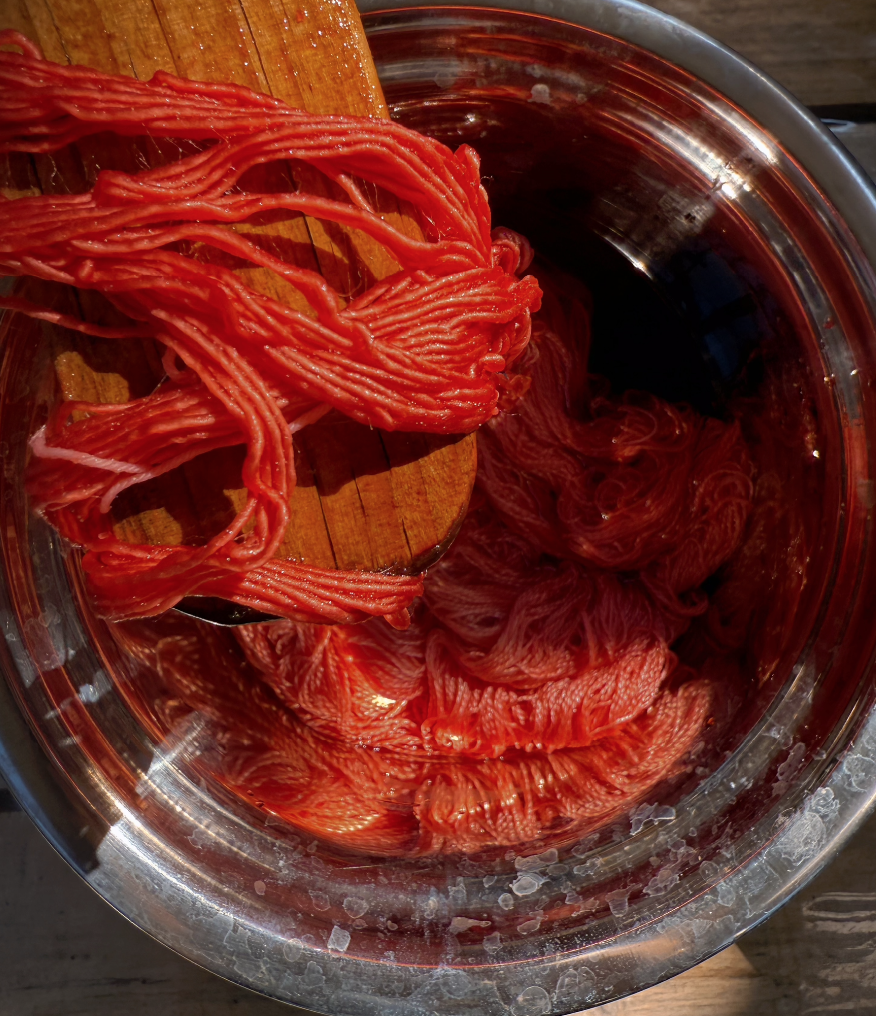 Image 4 of 20
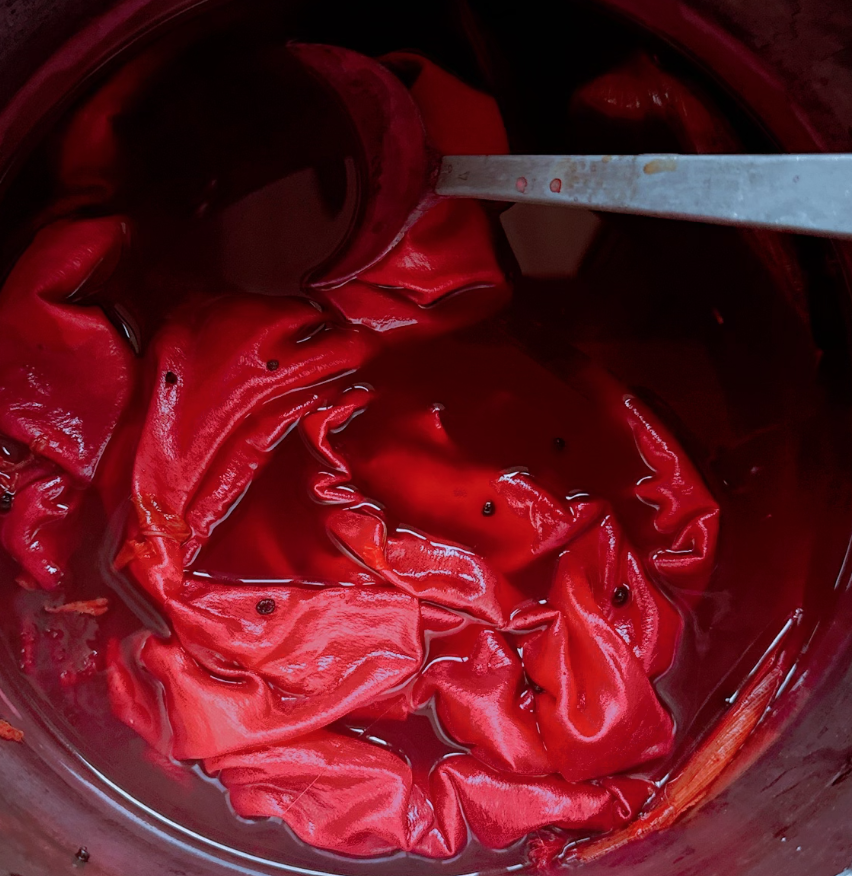 Image 5 of 20
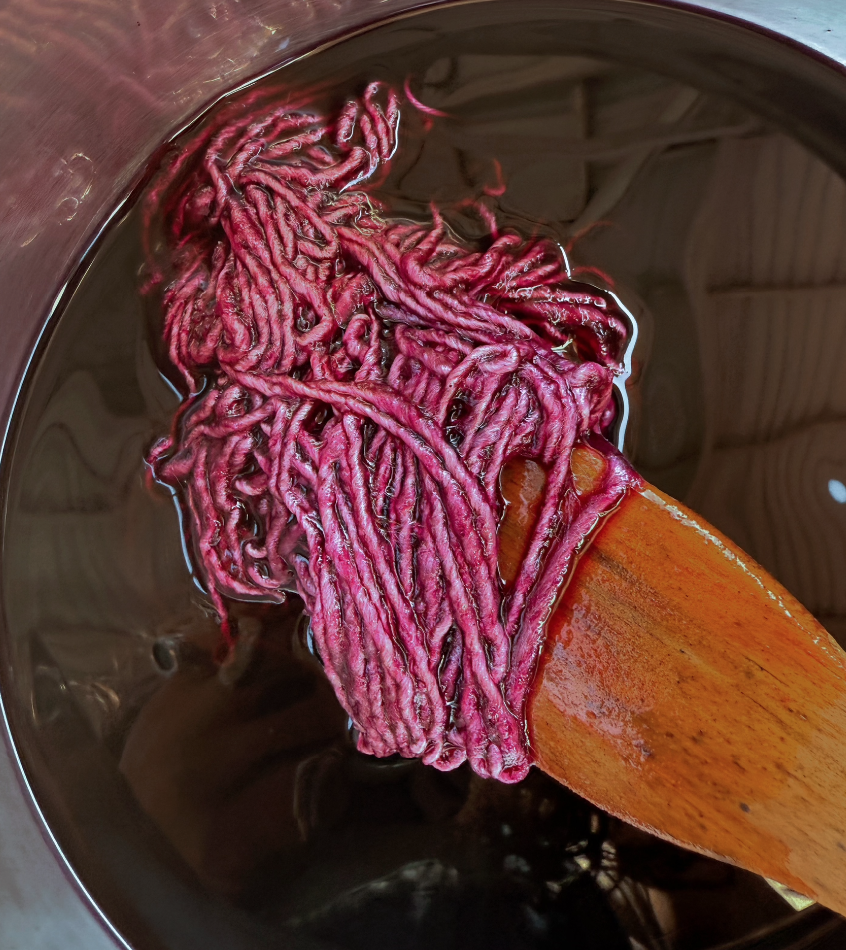 Image 6 of 20
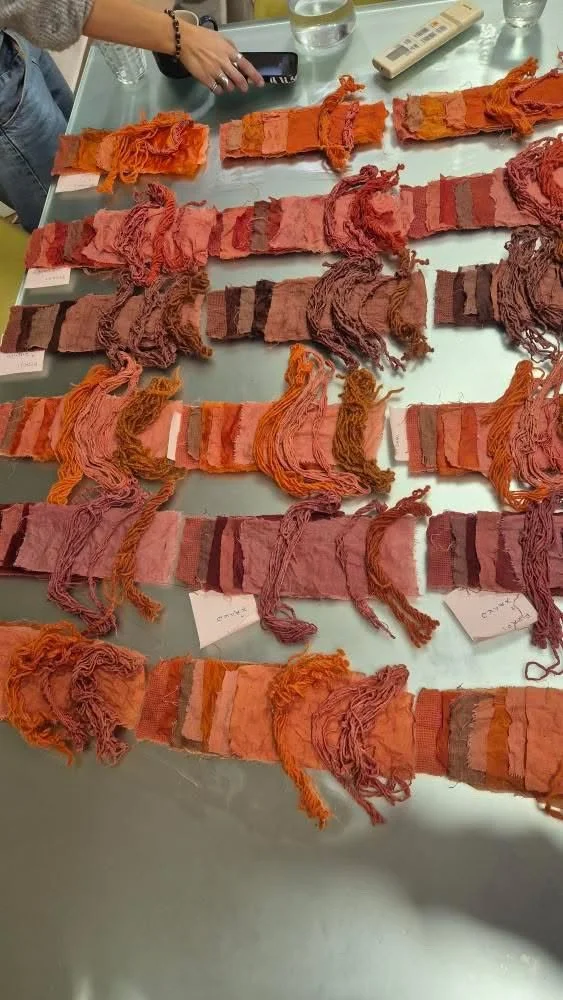 Image 7 of 20
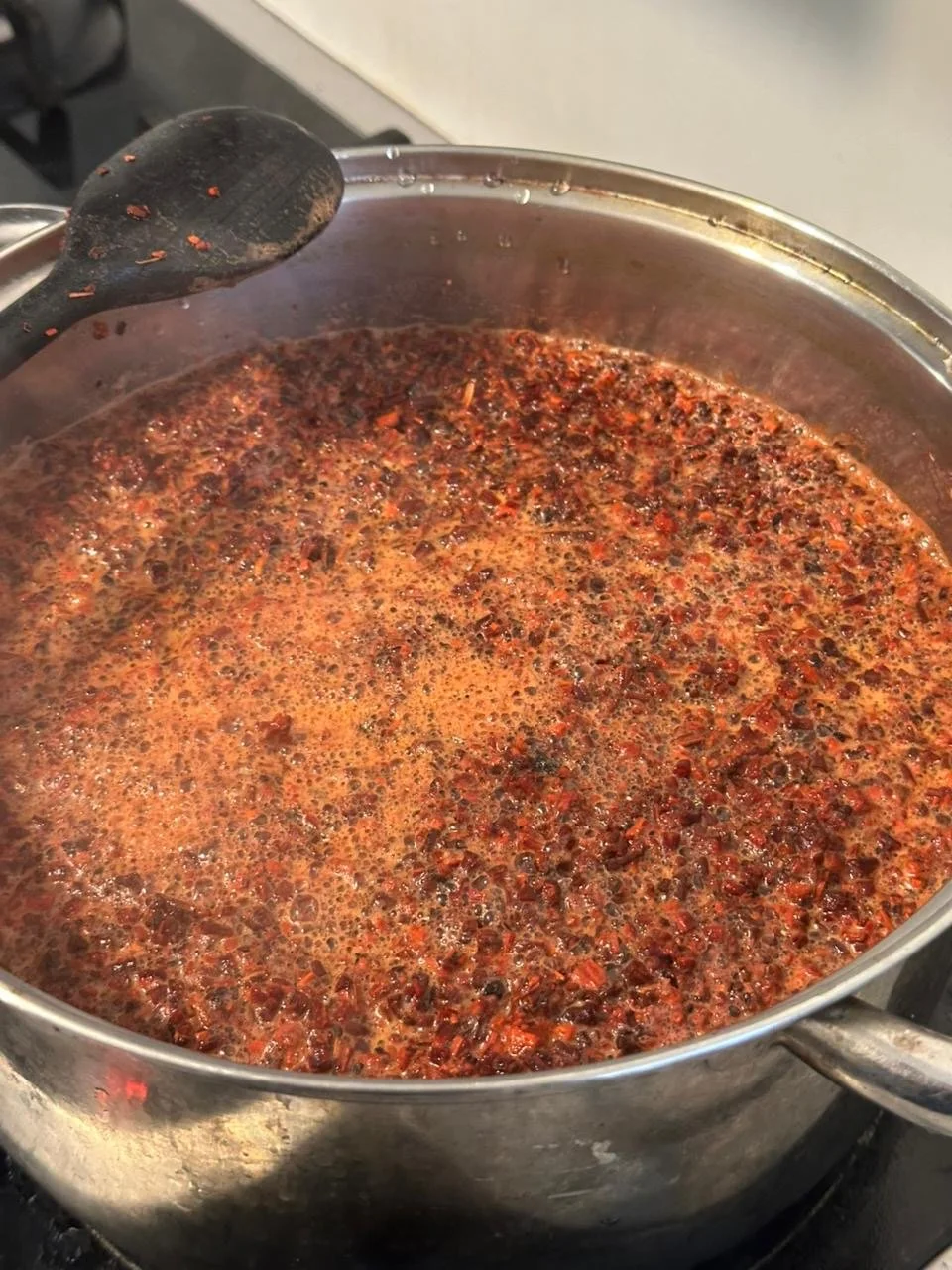 Image 8 of 20
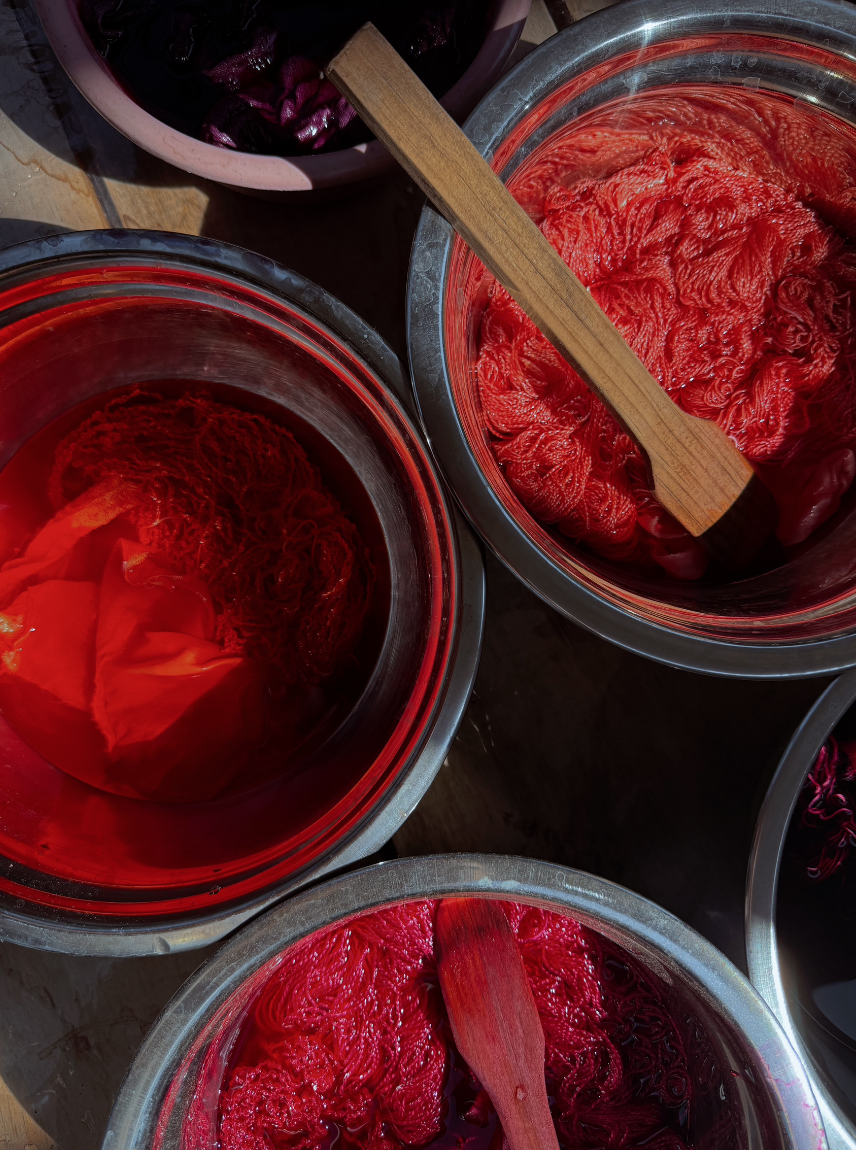 Image 9 of 20
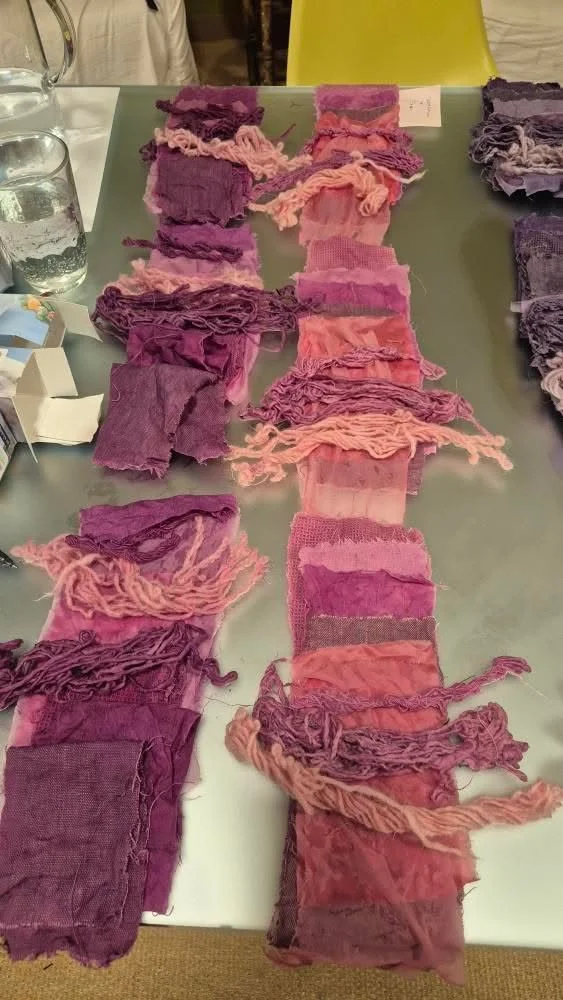 Image 10 of 20
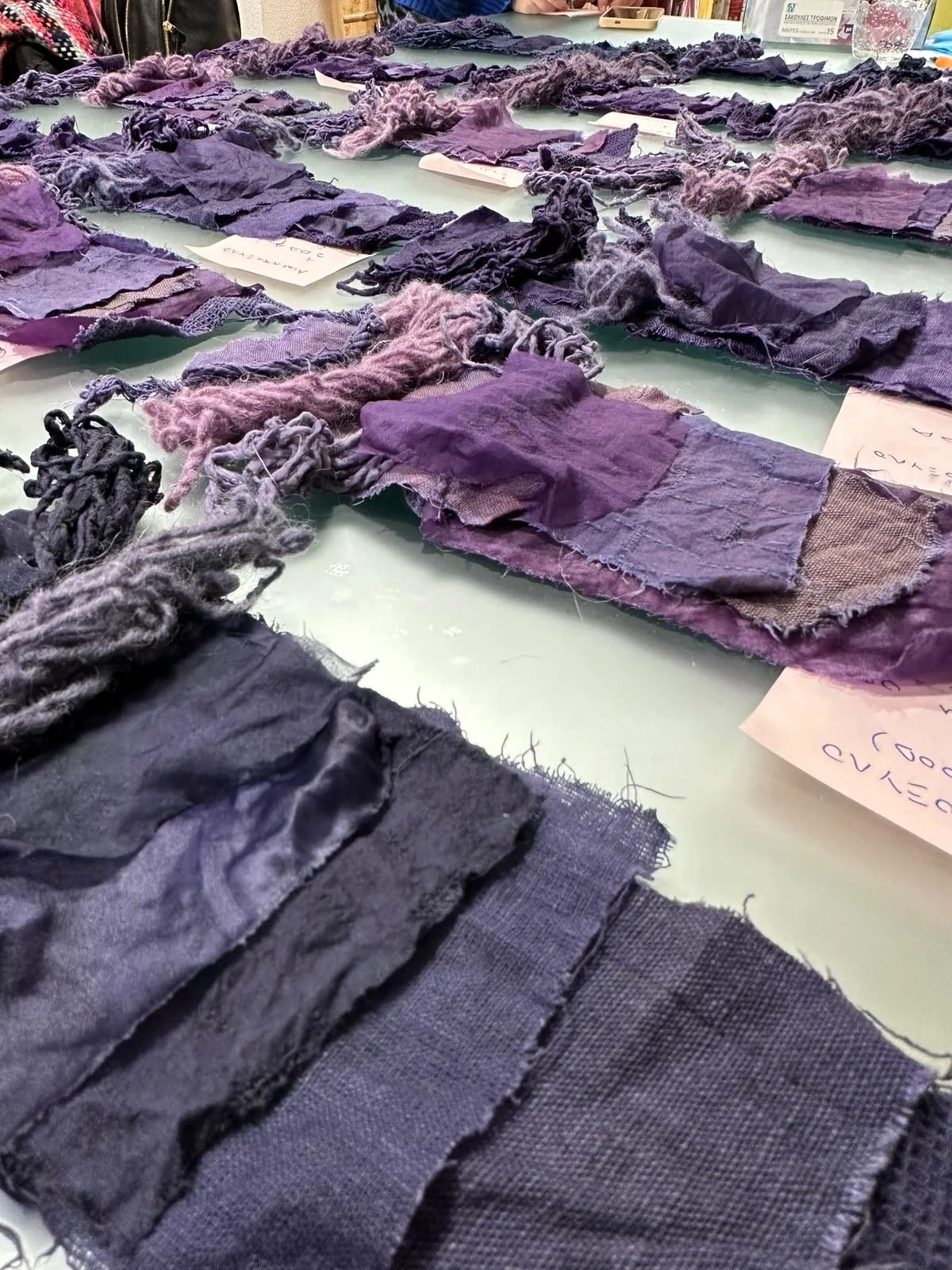 Image 11 of 20
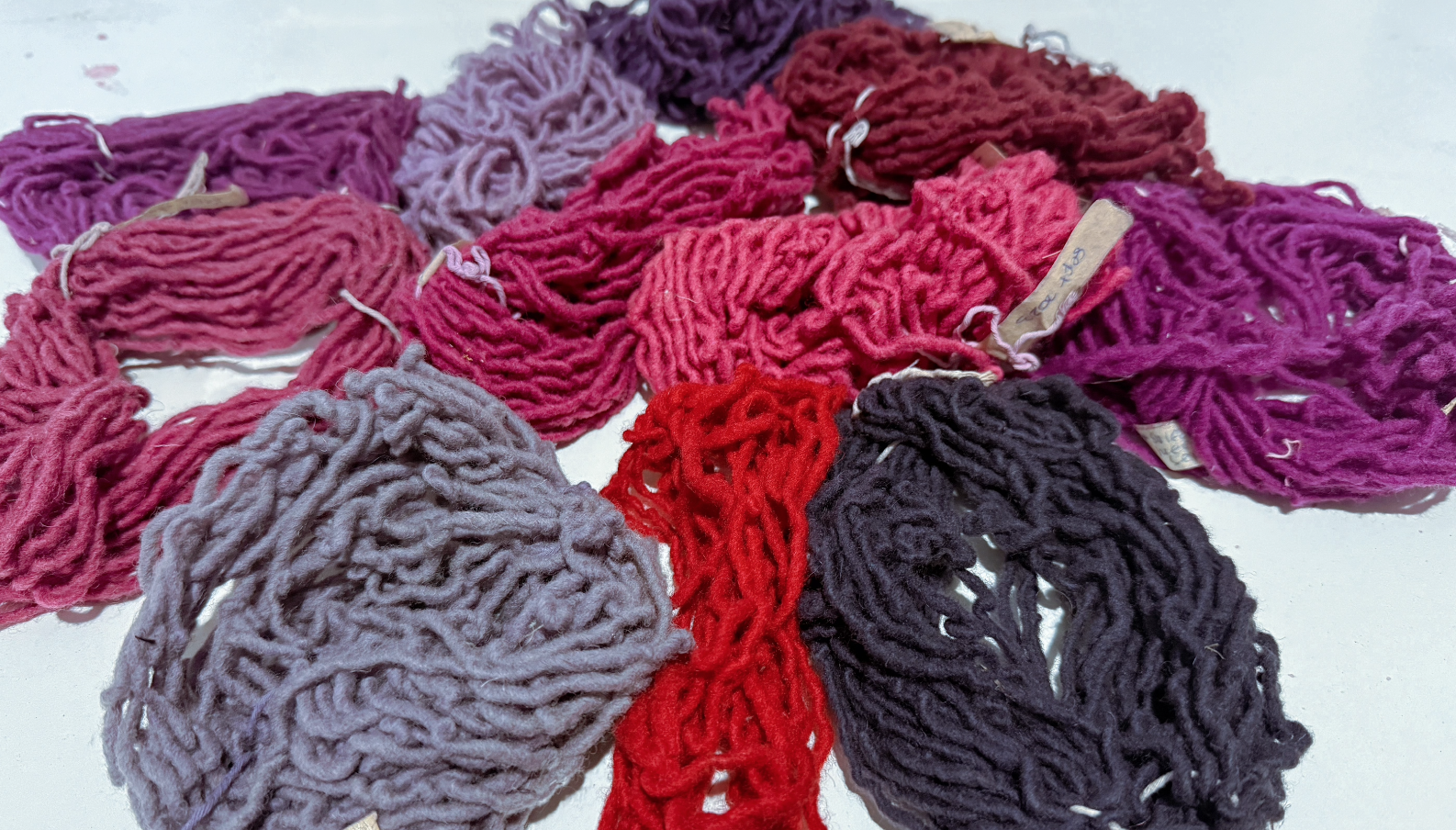 Image 12 of 20
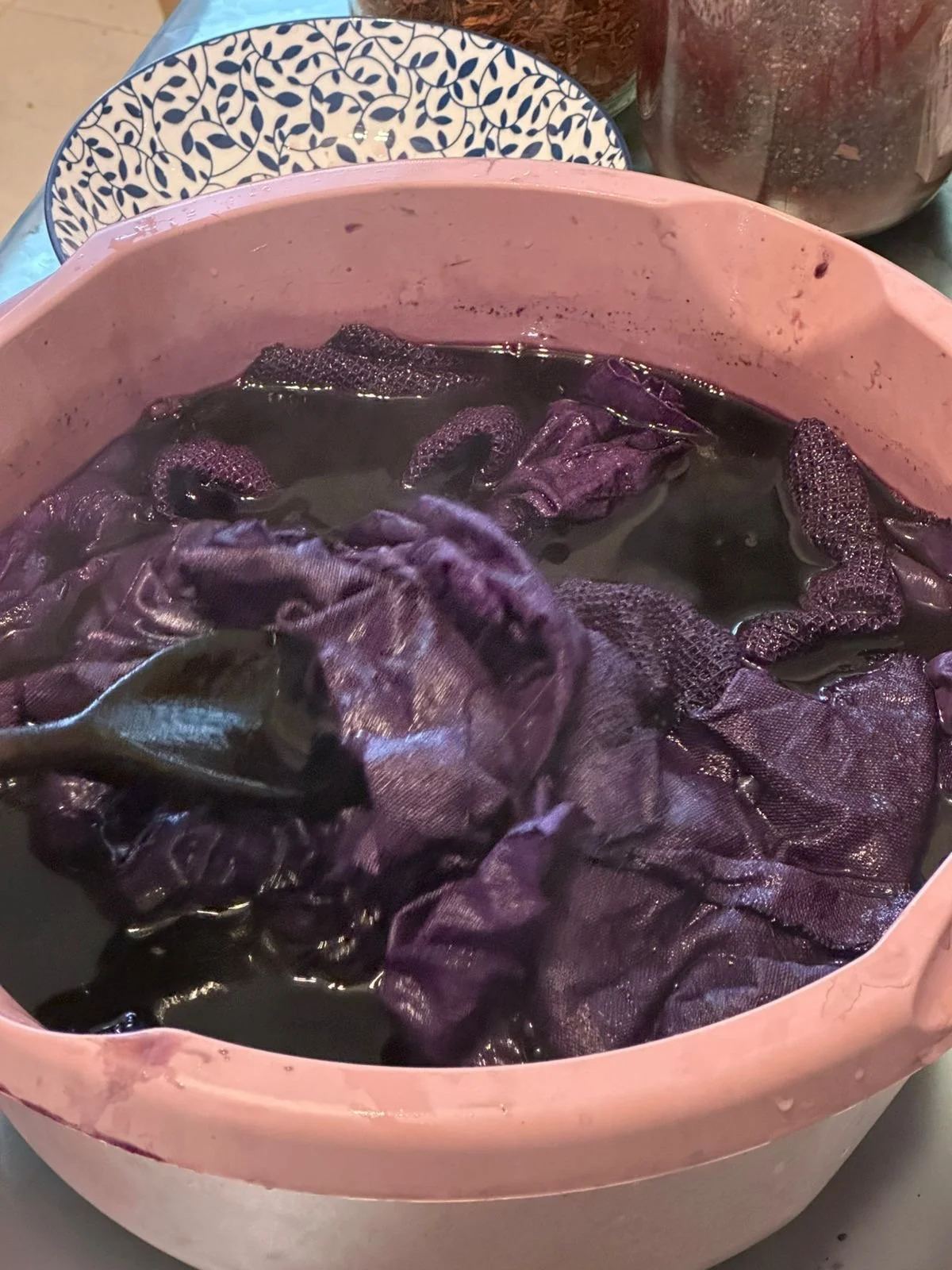 Image 13 of 20
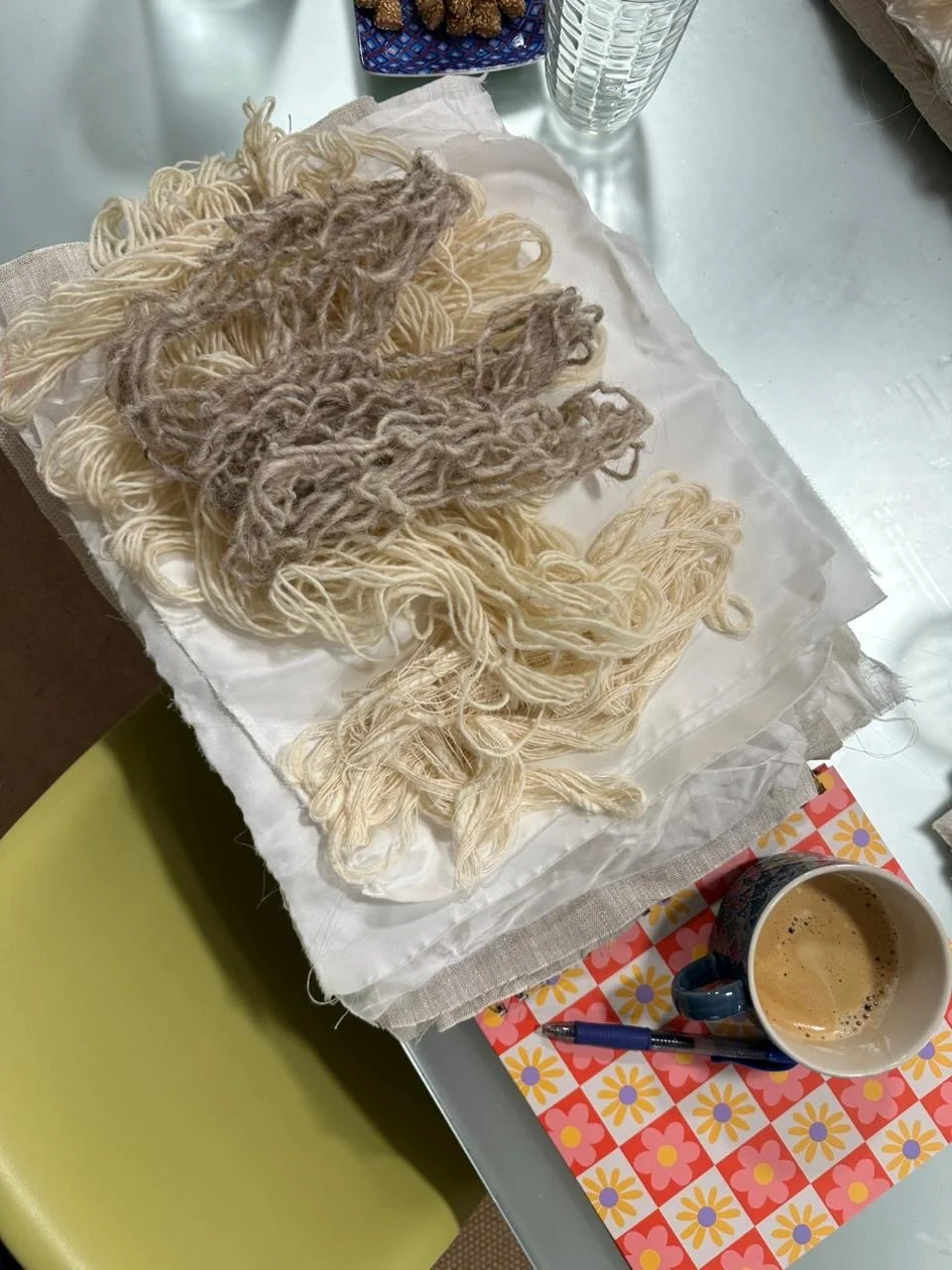 Image 14 of 20
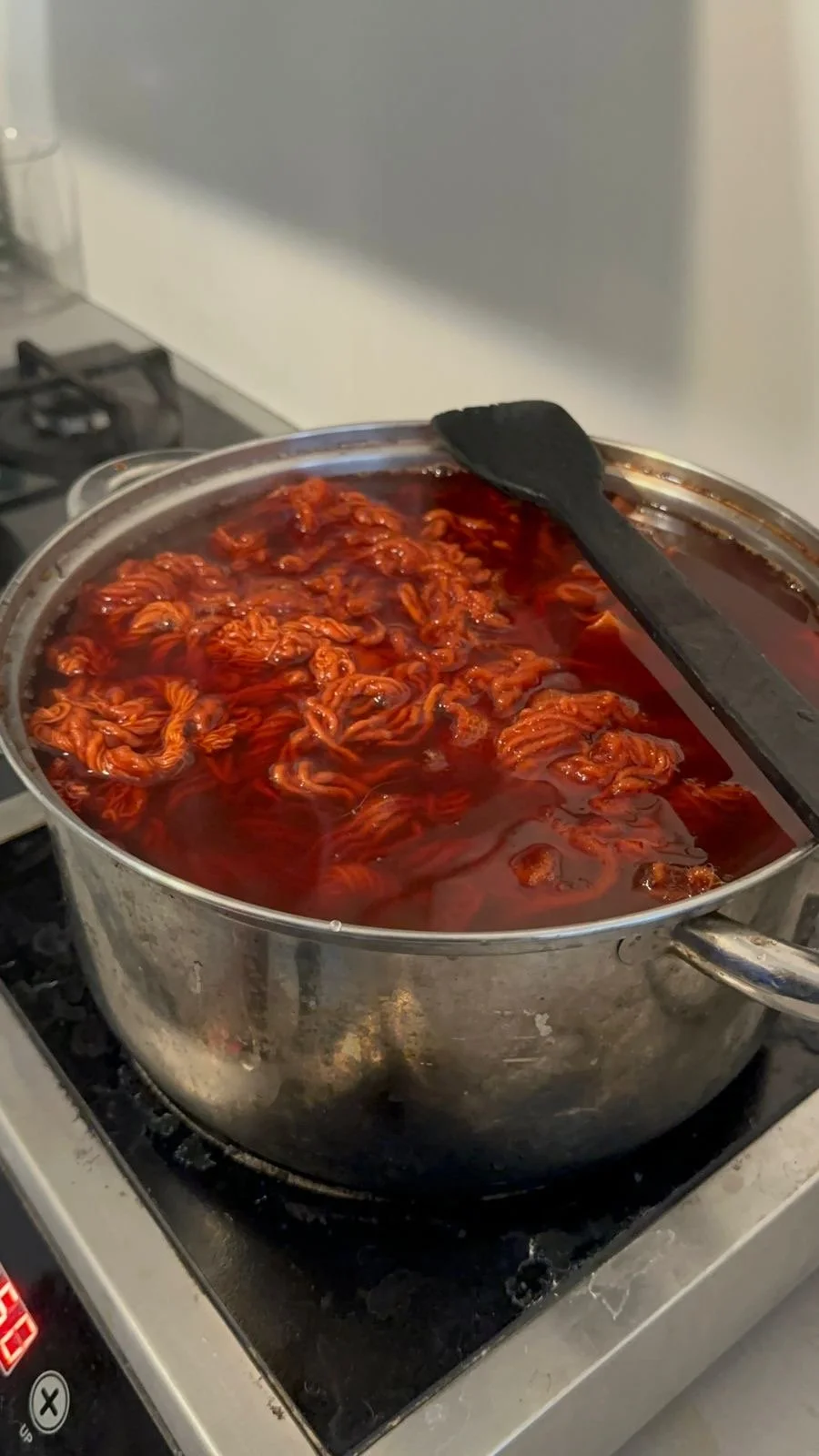 Image 15 of 20
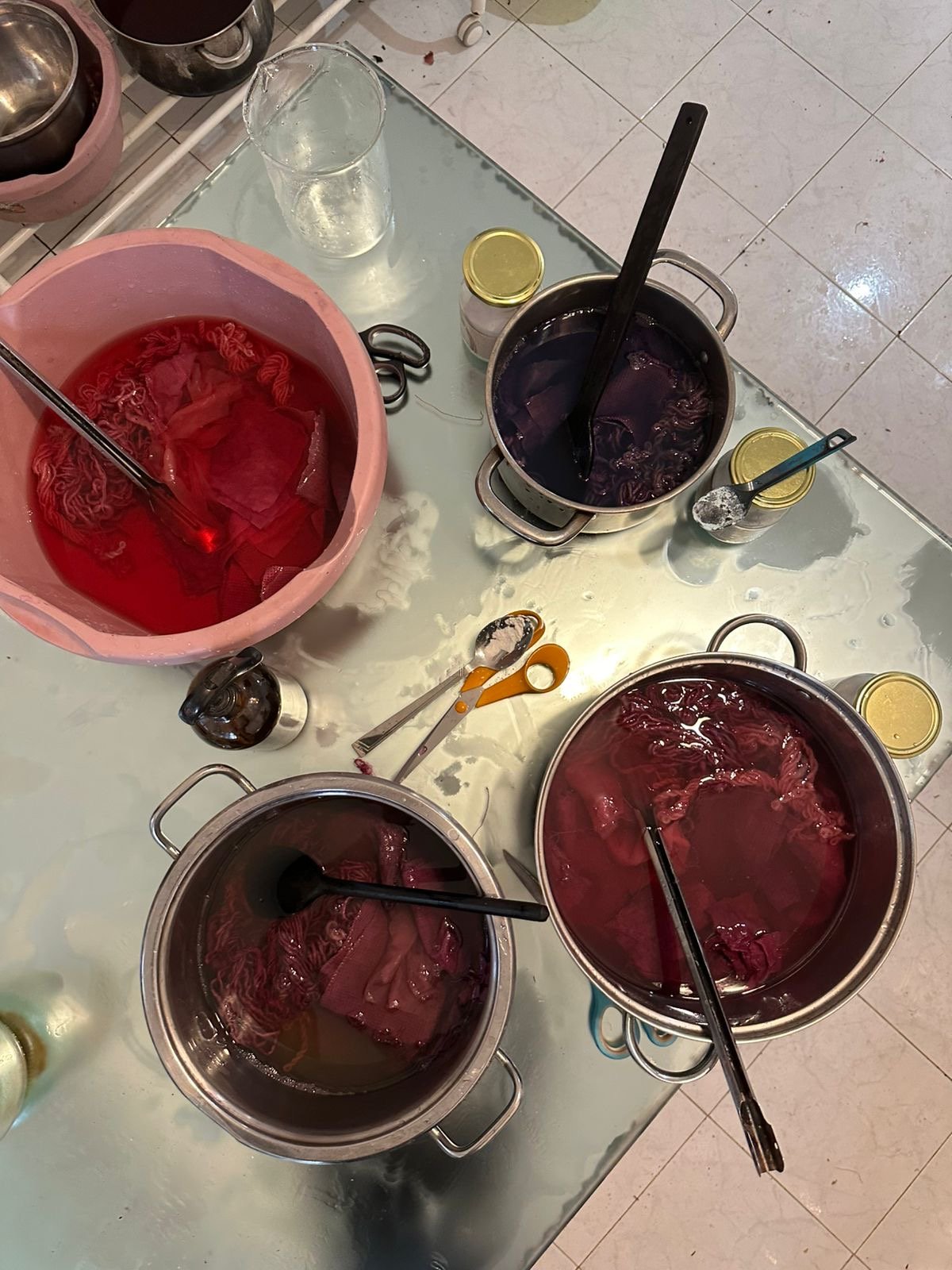 Image 16 of 20
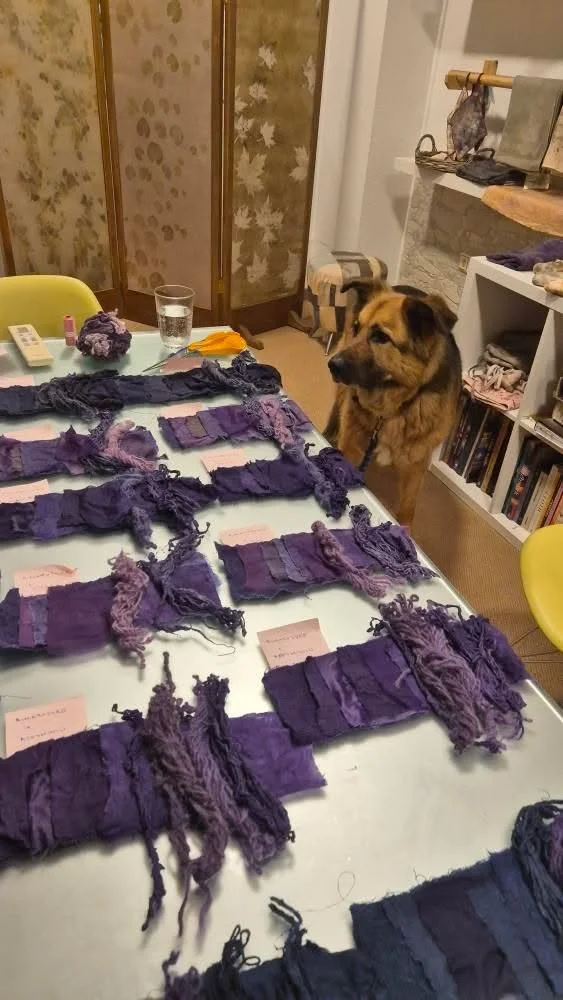 Image 17 of 20
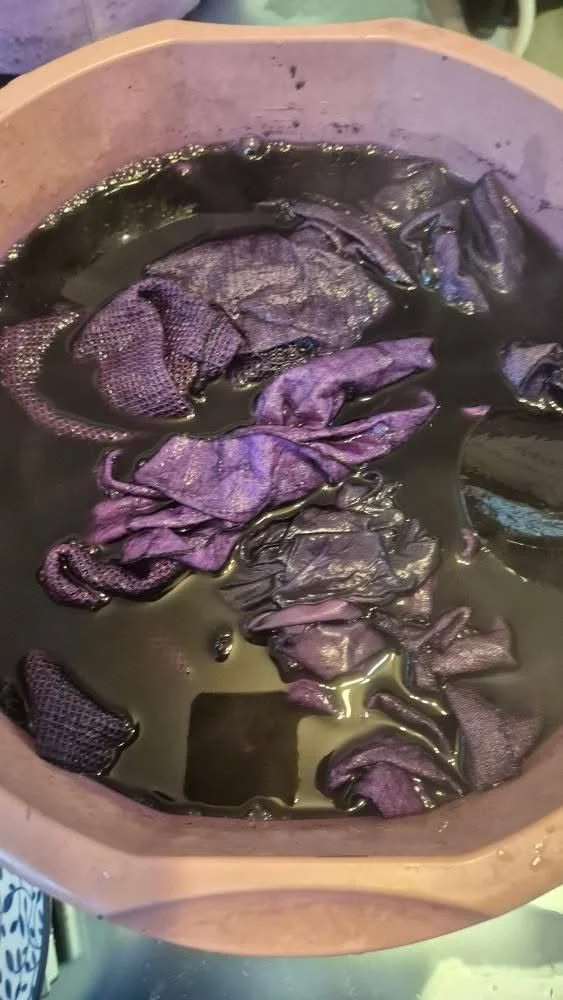 Image 18 of 20
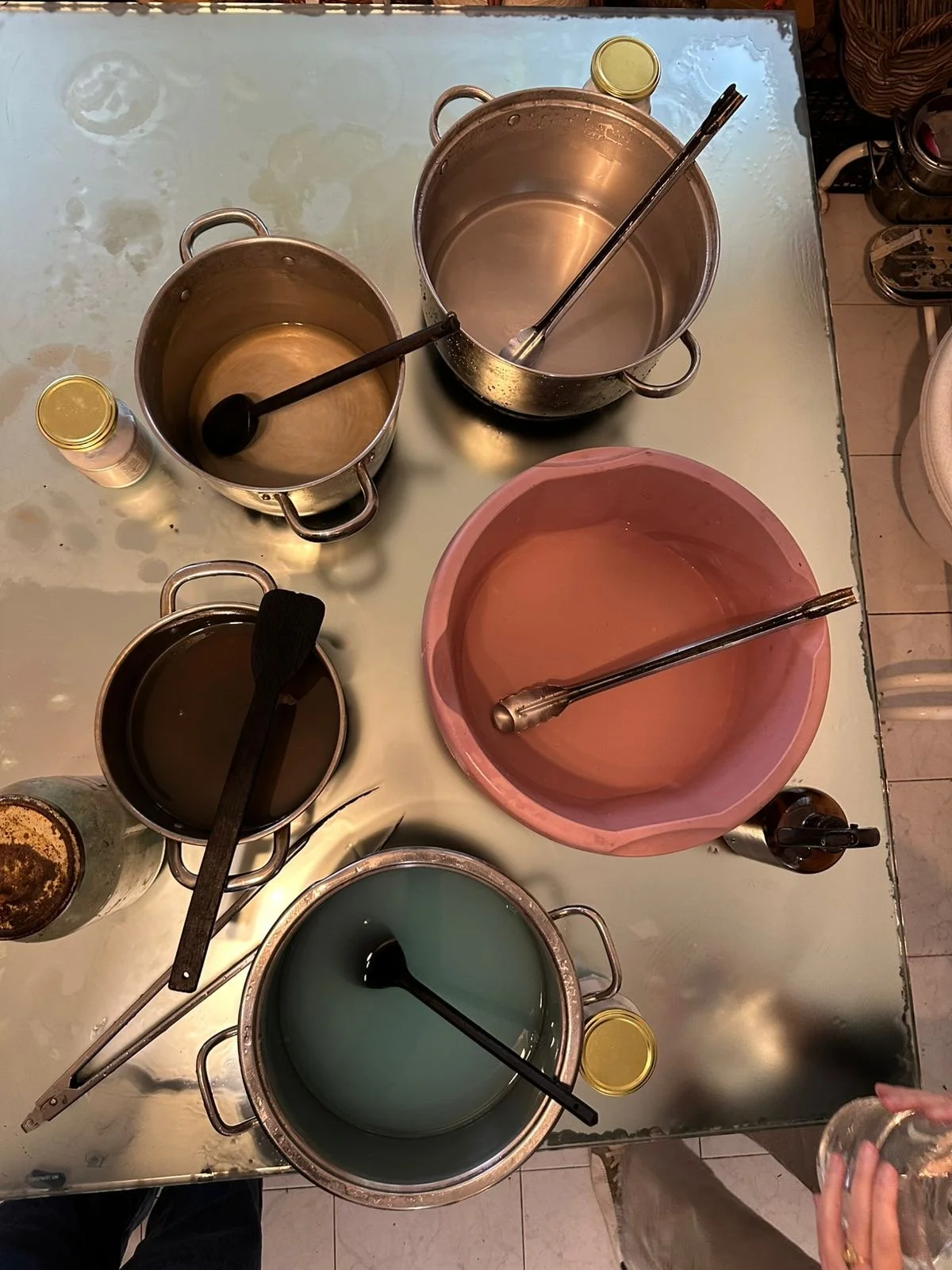 Image 19 of 20
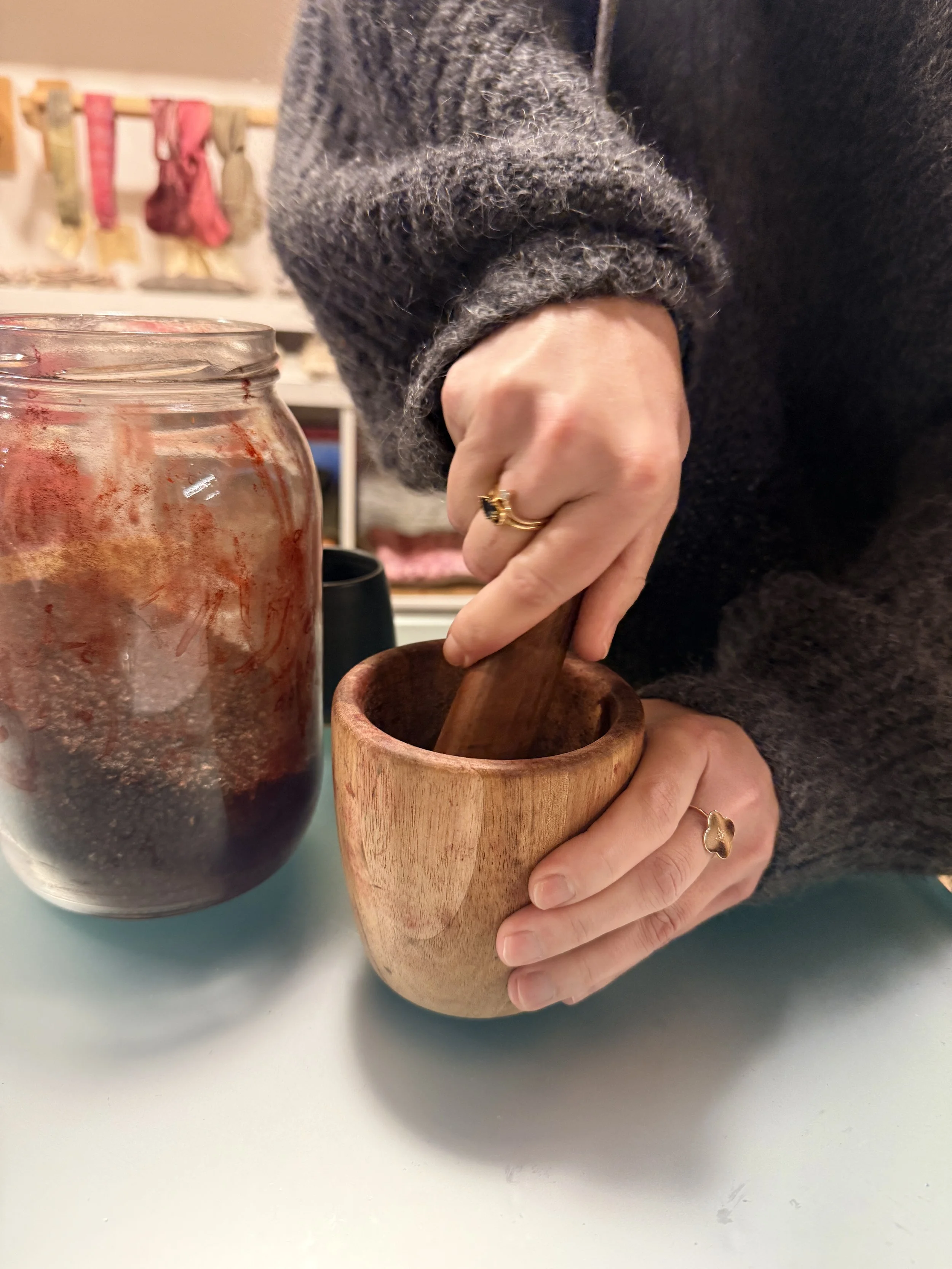 Image 20 of 20